Buy Now, Retire Later: Renting Your Mountain Home Until You Move
Yes, you can buy the house now and rent it out until you're ready to live in it, and for some couples it's the right call: you lock in the place, and a tenant helps carry the cost. It works when three decisions line up: the loan, the kind of rental the zoning allows, and how you'll move in later without tripping a tax rule. Below is each piece, plus a worked example with every assumption written down so you can swap in your own.
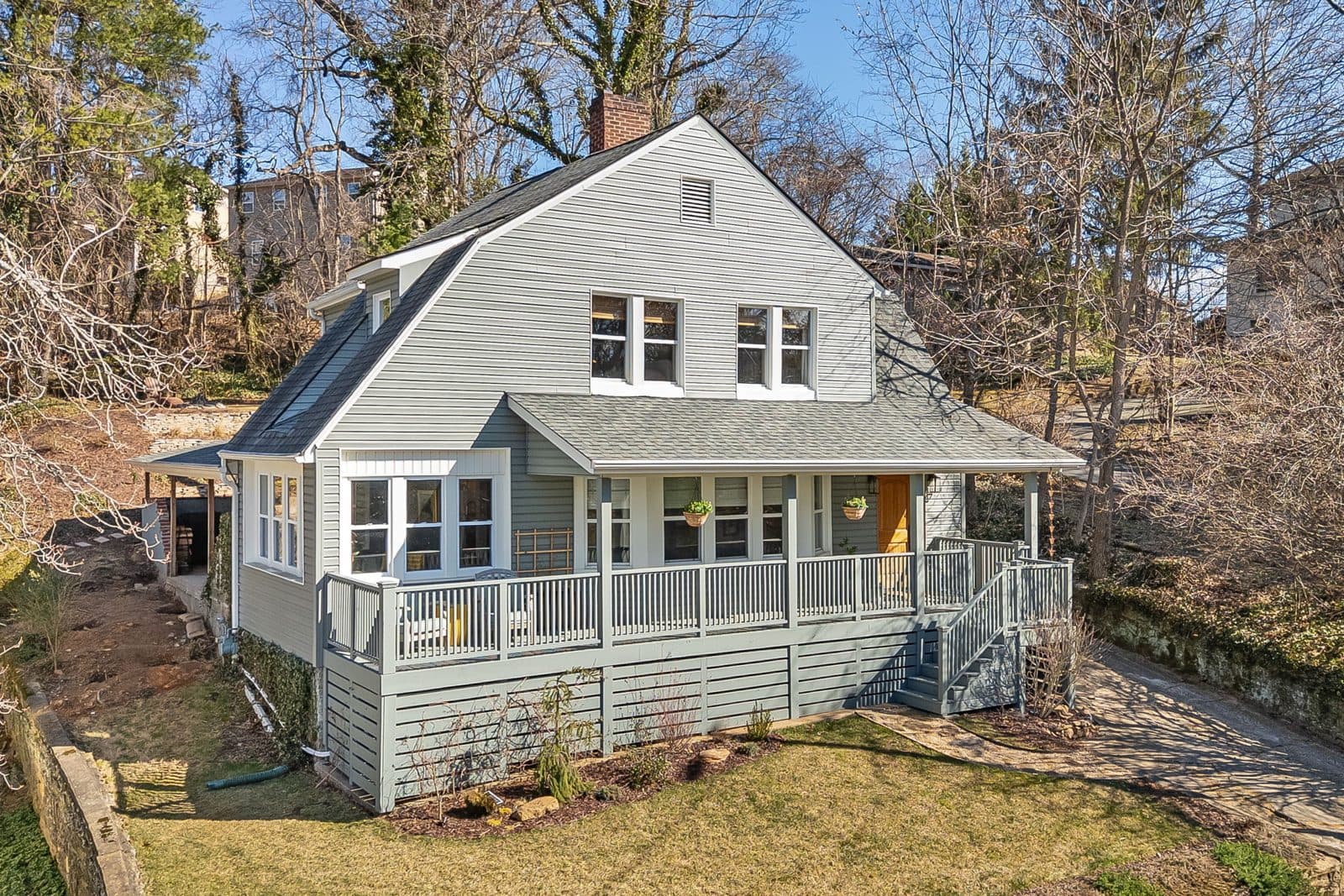
If you're planning to rent the house for a few years, read the rules before you read the rent comps. A retiring couple from Miami I'm working with right now are cash buyers and under contract on a home here. Part of their due diligence has been sitting down with the closing attorney and reading the community's HOA paperwork carefully, and paperwork like that is where any rental limits in a community would live. Whichever rental path you choose, decide before closing who answers a tenant's 2 a.m. call, because from Florida it won't be you.
This is general information, not legal, tax, or financial advice. Consult a North Carolina real estate attorney, a CPA familiar with both Florida and North Carolina, a licensed lender, and a licensed insurance agent about your situation.
Step 1: second-home loan or investment loan?
Second-home loan. Fannie Mae's definition (Selling Guide B2-1.1-01) requires that you occupy the home for some portion of the year and have exclusive control, and it "must not be rental property or a timeshare arrangement." Maximum loan-to-value on a one-unit purchase: 90%, so 10% down (Fannie Mae Eligibility Matrix, August 5, 2026).
Investment-property loan. Fannie defines this as property "owned but not occupied by the borrower." Maximum loan-to-value on a one-unit purchase: 85%, so 15% down, with higher pricing (same matrix). Many lenders ask for more.
Why it matters. Buy on a second-home loan and then run the house as a full-time rental, and you may be outside the loan's occupancy terms. If renting is the plan, financing it as an investment property from the start is cleaner. Tell your lender the plan and let them match the loan.
Cash sidesteps occupancy rules. You still want an inspection, a survey and title insurance.
Step 2: which kind of rental?
Rules and taxes differ by rental length. Town-by-town rules are in Short-Term Rental Rules Around Asheville.
| Long-term (12-month lease) | Mid-term (30 days to a few months) | Short-term (under 30 days) | |
|---|---|---|---|
| Allowed in Asheville city limits? | Yes | Generally yes; treated as residential use (confirm zoning) | Only Resort district or grandfathered units |
| Guest sales and occupancy tax | No (90+ days to the same person is exempt) | Taxable if 30-89 days, unless another exemption applies | Yes, about 13% in Buncombe |
| Your time in the house | Hard to use it yourself during the lease | Can block off gaps between stays | Easiest to use yourself |
| Furnishing, cleaning, turnover | Low | Medium | High |
| Main NC law | Landlord-tenant law (G.S. Ch. 42) | Ch. 42, or the Vacation Rental Act (Ch. 42A) for vacation stays under 90 days | Vacation Rental Act (Ch. 42A) |
NC landlord basics to know before you become a landlord from Florida:
- Security deposits: max 2 weeks' rent (week-to-week), 1.5 months (month-to-month) or 2 months (longer terms) (G.S. 42-51). Return and itemize within 30 days after the tenancy ends, with no deductions for normal wear and tear (G.S. 42-52).
- Late fees on monthly rent: at most $15 or 5% of rent, whichever is greater, only after rent is 5 days late (G.S. 42-46).
- No self-help. Changing locks or cutting utilities isn't allowed; tenants are removed only through court.
- Managers: anyone managing rentals for other people must hold an NC real estate broker license (NC Real Estate Commission rule).
Step 3: the worked example
Before real estate I was a nutrition scientist (PhD at UF, postdoc at Harvard), so I'm partial to a table that shows its work. A made-up house built from published data, to show the shape of the math. It predicts nothing, and the costs I couldn't source are listed by name below so you can fill them in.

The assumptions (every one of them)
| # | Assumption | Value used | Where it comes from |
|---|---|---|---|
| A1 | Purchase price | $500,000 | Round figure at the Buncombe County median sale price for May 2026 (Redfin, all residential) |
| A2 | Location | A house in unincorporated Buncombe County on a parcel where zoning allows STRs | Unincorporated Buncombe generally allows STRs (BPR, Jan. 31, 2024). You'd confirm for the real parcel |
| A3 | Financing | Investment-property loan, 15% down: $75,000 down, $425,000 loan | Fannie Mae max 85% LTV (matrix dated Aug. 5, 2026) |
| A4 | Mortgage payment | Left out. The comparison is before debt service | Rates change daily, so this example doesn't assume one. Ask your lender for a dated investment-property quote, and I'll add the payment line for a specific house |
| A5 | Property tax | $3,946 a year | $500,000 × 0.7892 ÷ 100, the 2026-27 county + unified fire rate (Buncombe rate PDF, July 23, 2026). Assumes assessed value = price. Actual 2026 bills use 2021 values and reset at the 2027 reappraisal |
| A6 | Flood insurance | $798 a year | Median NFIP cost for single-family homes outside the high-risk zone in Buncombe, policies effective June 2025 to May 2026 (our analysis of FEMA OpenFEMA data). Optional; your quote will differ |
| A7 | Long-term rent | $2,000 a month | Inside the 2026 Asheville range for 2-3 bedrooms: RentCafe 2BR $1,748 and 3BR $1,991 (Aug. 31, 2026); Zumper 2BR $1,700 and 3BR $2,297 (Sept. 24, 2026). These are city, apartment-heavy figures |
| A8 | Long-term vacancy | 1 month a year | My assumption for turnover between tenants |
| A9 | STR gross revenue, low | $32,976 a year | AirROI average annual revenue, Asheville (2026) |
| A10 | STR gross revenue, high | $41,500 a year | AirDNA average annual revenue per listing, "Asheville" market (data updated Sept. 22, 2026) |
| A11 | Guest taxes | Excluded from income | Guests pay about 13% in Buncombe; platforms collect most of it; it passes through to the state and county |
| A12 | Mid-term | Not modeled | No reliable public data. I can pull comparable listings for a specific house |
The math
| Line | Long-term lease | STR, low (AirROI) | STR, high (AirDNA) |
|---|---|---|---|
| Gross rent | $2,000 × 11 months = $22,000 | $32,976 | $41,500 |
| Property tax (A5) | -$3,946 | -$3,946 | -$3,946 |
| Flood insurance (A6) | -$798 | -$798 | -$798 |
| Left before the costs below | $17,256 | $28,232 | $36,756 |
On these assumptions, the STR column shows $10,976 to $19,500 more per year than the long-term lease, before the costs I couldn't source. Those costs fall much harder on the STR column.
Costs not in the table (get a real number for each)
- Insurance premium. Rentals usually need a dwelling policy, and STRs may need an endorsement or commercial coverage. NC dwelling rates rise an average of 5% on October 1, 2026 and again on October 1, 2027 (NC DOI, April 22, 2026).
- Property management. Ask local managers for written quotes for each rental type you're considering.
- Cleaning, linens and platform fees (STR and mid-term).
- Utilities and internet (usually yours for STR and mid-term).
- Furnishing and replacing what guests wear out.
- Maintenance, including snow and road costs on a private road, and HOA dues if any.
- Mortgage principal and interest (A4).
- Income tax. Net rental income goes on your federal return and an NC nonresident return (G.S. 105-153.8); NC's rate is 3.99% for 2026, and the budget signed July 7, 2026 lowers it to 3.49% for 2027 (NC Newsline). Depreciation and expenses change the taxable figure, so run it with a CPA.
What the example tells you
- The long-term lease has the lowest gross and the fewest moving parts.
- The STR column only exists if the parcel allows it, and it carries most of the unlisted costs.
- The vendor figures are averages. AirDNA's "Asheville" market covers more than the city, where whole-house STRs are mostly illegal, and its 2026 year-over-year jump is measured against the post-Helene slump. The two vendors sit more than $8,000 apart on the same market.
Have a specific house in mind? I'll run this table with its real tax bill, rent comps and your lender's quote.
Step 4: moving in later without tripping a tax rule
Take this part to a CPA before you buy, especially if a 1031 exchange is on the table.
1031 basics. Since 2018, only real property held for investment or business use qualifies for a like-kind exchange. The standard deadlines are 45 days to identify a replacement and 180 days to close (IRC 1031(a)(3); confirm with your qualified intermediary).
Vacation homes. IRS Revenue Procedure 2008-16 gives a safe harbor: a dwelling counts as investment property if you own it 24 months before (the home you sell) or after (the home you buy) the exchange, and in each of those two 12-month periods you rent it at fair rent for 14 or more days and limit personal use to the greater of 14 days or 10% of the days rented.
The 5-year rule. The Section 121 home-sale exclusion covers up to $250,000 of gain if single, or $500,000 if married filing jointly (same-sex married couples qualify the same way). It isn't available if you acquired the home in a like-kind exchange within the past 5 years, and you must have owned and lived in it as your main home for 2 of the 5 years before the sale (IRS Publication 523, 2025). Rental years after 2008 can also shrink the exclusion proportionally ("nonqualified use"), and depreciation claimed while renting is recaptured at sale.
An illustration only: a couple exchanges a Florida rental condo into a mountain house in 2027 and moves in during 2030. A sale within five years of the 2027 exchange wouldn't qualify for the exclusion at all. After that, the rental years can still reduce it, and the depreciation comes back.
Questions for your CPA:
- Should this be a 1031 replacement property or a fresh purchase?
- How would our rental years and personal use affect a future exclusion?
- What does depreciation recapture look like if we sell?
- How is the sale of our Florida home treated in the year we move?
The straight talk
- Long-distance landlording is a job. Someone answers the 2 a.m. water-heater call: you, or someone you pay.
- Renting costs you your own use. A 12-month lease means you visit as a guest somewhere else.
- NC taxes the rent even if you never live here, and the filing is yearly.
- Rules can change under you. Buncombe paused its STR restrictions after Helene and could restart them. A 12-month lease sits outside the STR rules.
- Sometimes renting isn't worth it. For some couples, the cleanest answer is a true second home until they move.
Questions people ask
Can I use a second-home mortgage and rent the house out? Fannie Mae's second-home definition says the property must not be rental property and you must occupy it part of the year. If renting is the plan, an investment-property loan (15% down minimum on the August 2026 matrix) is the cleaner fit. Tell your lender exactly what you intend.
How much can I make renting an Asheville-area house? For 2-3 bedrooms, 2026 long-term rent surveys for the city run roughly $1,700 to $2,300 a month. STR vendors estimate average annual revenue between about $33,000 (AirROI) and $41,500 (AirDNA). None of these is a promise, and costs and zoning change the picture a lot.
Is a long-term, mid-term or short-term rental best? It depends on the parcel's zoning, how much you want to use the house, and how much managing you want to do. Long-term has the fewest moving parts; STRs have the highest gross and the highest costs.
Can I 1031 exchange into my future retirement home? People do, but the rules are strict. The home must be held for investment first, and the Section 121 exclusion isn't available within 5 years of acquiring it in an exchange. Plan it with a CPA and a qualified intermediary before you buy.
Do I file a North Carolina return on rental income if I live in Florida? Generally yes. Rent from NC property is NC-source income, and nonresidents with that income above the standard deduction file an NC nonresident return. A CPA can tell you what you'll owe.
Next in this series
- Short-Term Rental Rules Around Asheville: what the zoning allows, town by town.
- Splitting the Year: domicile, Florida homestead and insuring a seasonal house.
- A Second Home in the Mountains: the hub for owning two places.
- The Three-Year Runway: a quarter-by-quarter plan for the move itself.
Send me the rental numbers on a property
Give me an address or MLS number. I'll send what the rules allow there and what the rental numbers look like.
Sources
- Fannie Mae Selling Guide B2-1.1-01, Occupancy Types, https://selling-guide.fanniemae.com/sel/b2-1.1-01/occupancy-types (section dated 2022-10-05)
- Fannie Mae Eligibility Matrix, https://singlefamily.fanniemae.com/media/20786/display (2026-08-05)
- City of Asheville, Homestays and Short Term Rental Violations, https://www.ashevillenc.gov/department/development-services/compliance-division/homestays-and-short-term-rental-violations/ (updated 2026-04-13)
- BPR/WUNC, Short-term rentals in Buncombe County FAQ, https://www.bpr.org/2024-01-31/short-term-rentals-in-buncombe-county-frequently-asked-questions (2024-01-31)
- Spectrum News, Buncombe County short-term rentals, https://spectrumlocalnews.com/nc/charlotte/news/2025/09/29/buncombe-county-short-term-rentals (2025-09-29)
- UNC School of Government, Occupancy taxes continued, https://canons.sog.unc.edu/blog/2014/04/28/occupancy-taxes-continued/ (2014-04-28)
- NCDOR, Current Sales and Use Tax Rates, https://www.ncdor.gov/taxes-forms/sales-and-use-tax/sales-and-use-tax-rates/current-sales-and-use-tax-rates (accessed 2026-09-25)
- NC G.S. Chapter 42A, Vacation Rental Act, https://www.ncleg.net/enactedlegislation/statutes/html/bychapter/chapter_42a.html (accessed 2026-09-25)
- NC G.S. 42-51, 42-52, 42-46, https://www.ncleg.net/enactedlegislation/statutes/html/bysection/chapter_42/gs_42-51.html (accessed 2026-09-25)
- Redfin Data Center, county market tracker, https://www.redfin.com/news/data-center/ (file updated 2026-06-02, May 2026 data)
- Buncombe County, Current Tax Rates PDF, https://www.buncombenc.gov/DocumentCenter/View/2147/Current-Tax-Rates-PDF (2026-07-23)
- Buncombe County, MyValueBC 2026 Reappraisal, https://www.buncombenc.gov/588/MyValueBC-2026-Reappraisal (accessed 2026-09-25)
- FEMA OpenFEMA NfipPolicies v3, https://www.fema.gov/api/open/v3/NfipPolicies (queried 2026-09-25; our analysis)
- RentCafe, Asheville average rent, https://www.rentcafe.com/average-rent-market-trends/us/nc/asheville/ (as of 2026-08-31)
- Zumper, Asheville rent research, https://www.zumper.com/rent-research/asheville-nc (as of 2026-09-24)
- AirDNA, Asheville overview, https://www.airdna.co/vacation-rental-data/app/us/north-carolina/asheville/overview (data updated 2026-09-22)
- AirROI, Asheville, https://www.airroi.com/airbnb-data/united-states/north-carolina/asheville (2026)
- NC DOI, Dwelling rate settlement, https://www.ncdoi.gov/news/press-releases/2026/04/22/commissioner-causey-negotiates-dwelling-rate-settlement-insurance-companies (2026-04-22)
- NC G.S. 105-153.8, https://www.ncleg.gov/EnactedLegislation/Statutes/HTML/BySection/Chapter_105/GS_105-153.8.html (accessed 2026-09-25)
- NC Newsline, Stein signs North Carolina budget, https://ncnewsline.com/2026/07/07/stein-signs-34b-north-carolina-budget-with-pay-raises-lower-taxes/ (2026-07-07)
- NC G.S. 105-153.7 (income tax rate), https://www.ncleg.gov/EnactedLegislation/Statutes/HTML/BySection/Chapter_105/GS_105-153.7.html (accessed 2026-09-25)
- IRS Revenue Procedure 2008-16, https://www.irs.gov/pub/irs-drop/rp-08-16.pdf (2008)
- IRS Publication 523 (2025), Selling Your Home, https://www.irs.gov/publications/p523 (accessed 2026-09-25)